
Short answer. The ravens are probably a Victorian invention, the White Tower is white because of a paint job in 1240, and Anne Boleyn almost certainly never passed through Traitors’ Gate. Here is the rest of what you will not have been told.
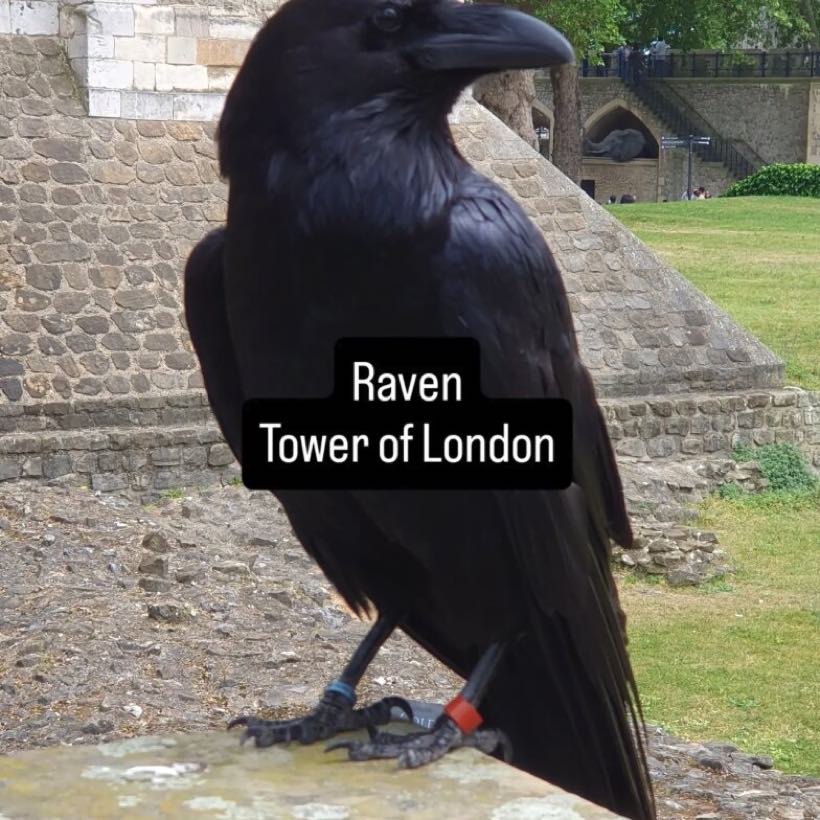
The raven legend is younger than the ravens
The story says the Crown falls if the ravens leave, and local legend traces the birds to Charles II, who reigned from 1660. The Tower’s own official historian reads the mythology as a Victorian flight of fantasy, and the earliest known reference to captive ravens here is an illustration from 1883. The birds you will see are real and the prophecy is old; the chain between them is not.
The White Tower is white because of paint
Henry III had the keep whitewashed in 1240. The name describes a finish, not the stone you are looking at, which is Kentish ragstone with Caen limestone dressings shipped from Normandy.
Anne Boleyn probably never went through Traitors’ Gate
It is the most repeated story about the arch, and the contemporary chronicle of Charles Wriothesley has her entering by a court gate in the Byward Tower instead. Thomas More did come in through the water gate. Elizabeth was brought to the Tower on 18 March 1554, after Wyatt’s Rebellion.
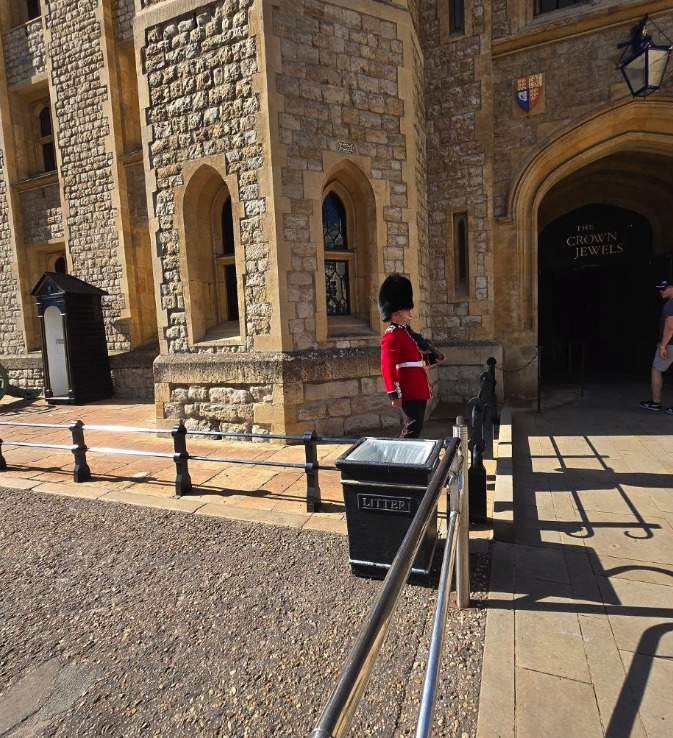
The Crown Jewels you see are mostly younger than the United States is old
Most of the collection dates from around 1660 and the accession of Charles II. The medieval and Tudor regalia had been sold or melted down under the Commonwealth, so what you file past is a Restoration rebuild of something much older.
A Keeper of the Crown Jewels has existed since 1207
The post predates the regalia’s move into the fortress by more than a century. The jewels came here during the 14th century, after a run of thefts and attempted thefts at Westminster Abbey, where they had been kept.
Becoming a Beefeater takes at least 22 years first
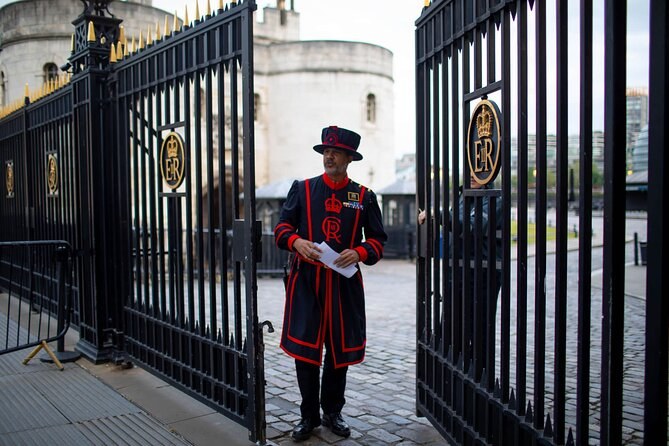
Every Yeoman Warder is retired from the British Armed Forces, must be a former warrant officer with at least 22 years’ service, and must hold the Long Service and Good Conduct Medal. There are 32 of them plus one Chief Warder, and the one who takes your tour lives inside the walls.
Nobody is sure why they are called Beefeaters
The earliest link to the Royal Household is Cosimo III de’ Medici, Grand Duke of Tuscany, who used the word after visiting the Court in 1669. It was already slang for the English generally before that.
The gates are locked to a script that has not changed in centuries
At 9.52pm the Chief Yeoman Warder leaves the Byward Tower in a Tudor watchcoat carrying a candle lantern. At the Bloody Tower archway a sentry challenges him: “Halt! Who comes there?” — “The keys” — “Whose keys?” — “King Charles’s keys.” If you get a place, that is what you will hear, and it is described as the oldest extant military ceremony in the world.
The Royal Mint worked here for about five centuries
Alongside the armoury, the treasury, a menagerie of exotic animals and the public record office. You are walking through what was, for most of its life, an industrial and administrative site rather than a prison.
The chapel inside the keep is the oldest whole church in London
The Chapel of St John the Evangelist, built into the White Tower in the 1070s and still standing complete. You will almost certainly walk through it on the way to the armour without noticing.
Three queens died on a lawn the size of a tennis court
Anne Boleyn, Catherine Howard and Lady Jane Grey were all beheaded on Tower Green rather than in public on Tower Hill. Private execution was a privilege of rank. Queen Victoria had the spot paved in granite, and whether it is the right spot is still argued over.
It took 2.8 million visits in 2025
2,817,852, by the Association of Leading Visitor Attractions’ count, making it the ninth most-visited attraction in the United Kingdom that year and down three per cent on the year before. You will not be alone in there.
The fortress was a zoo for six centuries
The Royal Menagerie kept exotic animals here from the 13th century until the 1830s, when the collection moved out and helped found London Zoo. Lions, an elephant, a polar bear that was let out on a chain to fish in the Thames. The barbican it was kept in came to be called the Lion Tower, and the rest of that story sits on the history page.
The keep took longer to build than anyone can explain
Dendrochronology puts the start of the White Tower between 1075 and 1079. The archaeology of the standing building suggests work stopped between 1080 and the early 1090s, and nobody knows why. A stone keep on that scale was an enormous undertaking for a king who had held the country for less than a decade.
It has never been successfully stormed
Besieged several times, and control of it has repeatedly meant control of London, but it has not fallen to an assault. It was handed over, negotiated away, and occasionally walked into during a riot — which tells you more about English politics than about the walls.
The public record office lived here too
Between the mint, the armoury, the menagerie and the treasury, the fortress spent centuries as a working government department rather than a monument. The national records were stored here before the Public Record Office was built, which is why so much of what survives about medieval England passed through these walls at some point.
The chapel outside is where the executed were buried
St Peter ad Vincula, the chapel royal inside the walls, stands a few steps from the green. Anne Boleyn, Catherine Howard and Lady Jane Grey were carried there after their executions. It is still a working parish church for the community that lives inside the fortress, which includes the Yeoman Warders and their families.
The numbers, in one place
| Founded | End of 1066 |
| The keep begun | 1075–1079 by the timber evidence; 1078 by tradition |
| Whitewashed | 1240, by order of Henry III |
| Keeper of the Crown Jewels since | 1207 |
| Queens beheaded on Tower Green | Three |
| Yeomen Warders today | 32, plus one Chief Warder |
| Minimum service to become one | 22 years |
| Ravens | At least six; eight as of 2025 |
| World Heritage listing | 1988 |
| Visits in 2025 | 2,817,852 |
Figures as sourced in this site’s content foundation; the visit count is ALVA’s published 2025 table.
Where these come from
Every figure above is traceable. The visit count is ALVA’s published table for 2025. The dating of the keep, the whitewashing, the regalia and the Warders’ service requirement come from the published record rather than from tour marketing. The facts page sets out the numbers with their sources beside them, and anything unverified is marked as such rather than rounded off. You can follow each one back.
✅ Useful Tip The stories above are the ones a Yeoman Warder will tell better than any page can, and their tour is included with admission. If you would rather have one to yourselves, the Beefeater tours are the departures that book that time in advance.
Standing where these happened costs less than most people assume. The cheapest way through the gate on beefeater tour tower of london is a day ticket, and it includes the Jewel House, the keep and a Warder’s tour of the grounds.
Tours that fit this
Chosen for what this page covers.
If one of these caught you, book the departure that gives you a Warder for long enough to ask about it.