
Short answer. Twenty-odd named towers sit inside two rings of wall. Do them in this order: the Jewel House, the White Tower, Tower Green and the chapel, then the Wall Walk and the Medieval Palace if the weather holds.
The shape of the place
The fortress grew outwards. William the Conqueror’s stone keep went up in the 1070s in the corner of the Roman city wall. Richard I, Henry III and Edward I then wrapped it in two concentric rings of curtain wall and a moat across the 12th and 13th centuries. Everything you walk between today sits in one of those two rings, which is why the route matters: the inner ward holds the keep and the Jewel House, the outer ward holds the water gate. The history page follows the building sequence in full.
The Jewel House
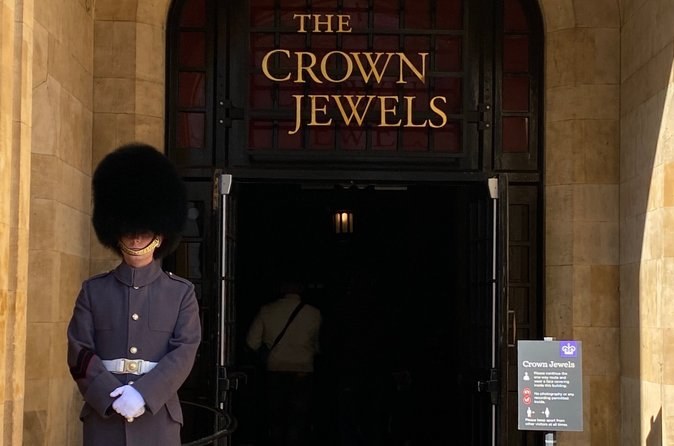
A vault inside the Waterloo Block, a former barracks, opened by Queen Elizabeth II in 1994 and refurbished in 2012. It holds the working coronation regalia — the only such set still in use in Europe, and the most complete royal regalia anywhere. Most of what is displayed dates from about 1660, because the medieval and Tudor regalia were sold or melted down under the Commonwealth. Photography is not permitted inside. The Crown Jewels page covers what is on display and how the visit works.
The White Tower
The keep the whole fortress is named after. Tradition dates it to 1078, because the Textus Roffensis records Gundulf, Bishop of Rochester, overseeing the work; the timber gives a start between 1075 and 1079, with an unexplained pause between 1080 and the early 1090s. Henry III had it whitewashed in 1240, which is where the name comes from. Inside are the Royal Armouries, the United Kingdom’s national collection of arms and armour and its oldest museum. It is stairs from bottom to top and there is no lift.
💡 Did You Know? The Office of the Armoury grew out of the King’s Privy Wardrobe here in the mid-15th century, overseen from 1423 by the Master of the King’s Armour and based in this building. The collection is now split between the Tower, Leeds and Fort Nelson.
The Chapel of St John the Evangelist
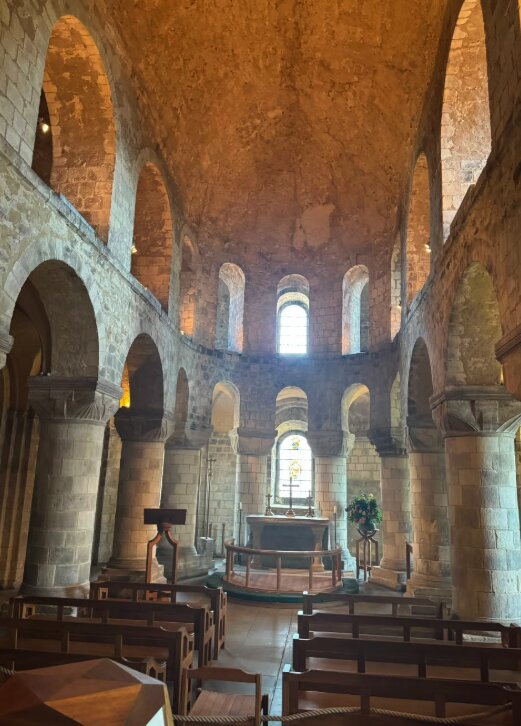
Built into the keep itself, and the oldest church building in London still standing whole. Round Norman columns, a barrel vault, no decoration to speak of. Most visitors walk through it on the way to the armouries and do not stop. Stop.
Tower Green and the chapel royal
Three English queens were beheaded on the green: Anne Boleyn, Catherine Howard and Lady Jane Grey. Execution inside the walls was a privilege of rank, and it spared both the condemned a jeering crowd and the Crown the publicity. Most prisoners were killed in public on Tower Hill instead. Queen Victoria had granite paving laid to mark the spot, though whether it is the right spot is disputed. The Chapel of St Peter ad Vincula stands a few steps away and is where the executed were buried.
Traitors’ Gate
Edward I built it as a water gate, part of St Thomas’s Tower, so that the royal apartments could be reached from the river. The name has been in use since before 1543. Prisoners were rowed here along the Thames, under London Bridge, where the heads of the recently executed were displayed on spikes. Thomas More came in this way. Behind the arch there was once an engine that raised water to a cistern on the keep roof, driven first by the tide, later by steam, and adapted in the 1720s to bore gun barrels.
The Bloody Tower
Named for the disappearance of Edward V, aged twelve, and his brother Richard, Duke of York, aged nine, in 1483. Their uncle lodged them here ahead of Edward’s coronation, Parliament declared them illegitimate, and their uncle took the throne as Richard III. They were never seen again, and everything after that is inference.
The Medieval Palace
Reconstructed royal rooms in St Thomas’s Tower, the Wakefield Tower and the Lanthorn Tower, furnished as they might have been under Edward I. It is the part most visitors miss, because it sits off the main route and looks like a side door. Give it twenty minutes.
The Wall Walk
The route along the top of the inner curtain wall, through a sequence of the smaller towers, with the best views down into the inner ward and out across to Tower Bridge. It closes first in bad weather and it involves stairs at both ends.
The ravens
At least six by tradition and eight as of 2025, kept against the belief that the Crown falls if they leave. They are on the lawn beside the keep most of the day. Their page covers where the legend actually comes from, which is later than the story suggests.
The Fusilier Museum
A regimental museum inside the walls, covering the Royal Regiment of Fusiliers, which was raised at the Tower in 1685 and kept its home here. It is small, it is quiet even in August, and it is the one building where you can sit down. Most visitors walk past the door without registering it.
The moat, and why it is dry
The moat was cut by Edward I in the 1270s and fed from the Thames, and it was drained in the 1840s after it became a health problem. It is grass now, and it is where the Yeoman Warder tours gather before they set off. Standing in it is the best way to understand the scale of the outer curtain wall, because from inside the fortress you never see the full height.
Where a guide can come with you, and where they cannot
This changes how you should read every guided listing here. The venue does not permit guiding inside the Jewel House or inside the keep. Every guided departure therefore works the grounds, the green, the water gate and the outer walls, and hands you over at those two doors. One listing states it outright by excluding a guided interior tour from what you are buying.
That is not a criticism of the tours; it is the venue’s rule and it applies to all of them equally. It does mean the value of a guide here is in the setting-up rather than the walking-through, which is why the departures that spend longest outside the buildings tend to be rated highest.
Doing it in the right order
| Order | Where | Roughly |
|---|---|---|
| 1 | The Jewel House | 20 to 30 minutes, less if you arrive at opening |
| 2 | The White Tower and the armouries | 45 minutes |
| 3 | Tower Green and St Peter ad Vincula | 15 minutes |
| 4 | Traitors’ Gate and the Medieval Palace | 25 minutes |
| 5 | The Wall Walk | 30 minutes, weather permitting |
| 6 | The ravens, and the shop | As long as you like |
A three-hour route. Reverse it if you arrive after three, when the Jewel House queue has collapsed again.
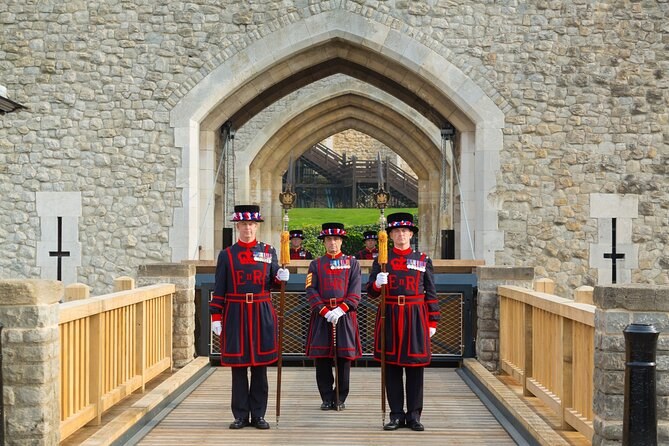
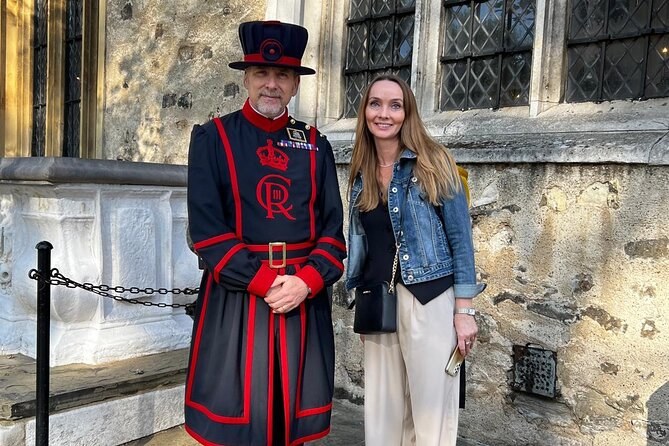
✅ Useful Tip A Yeoman Warder tour leaves the moat every half hour and is included with your ticket. Catch one first if you can: the buildings make far more sense after somebody has told you what happened in them. Who the Warders are is worth knowing too.
Which departure gets you the most time among these buildings is a different question, and it is answered in the comparison on Tower of London Tours. The longest are the small-group and VIP tours, at three hours inside the walls.
Tours that fit this
Chosen for what this page covers.
Pick the tour by how long it leaves you inside the walls, not by how long the tour itself lasts — on this list the two are rarely the same.