Three hours covers the Jewel House, the keep and Tower Green without hurrying. The order matters more than the hour you arrive, and one of the three has to come first.
In this guide
- The three-hour version, by the clock
- Should you arrive at opening or at three?
- Why the Crown Jewels have to come first
- How long does the White Tower take?
- Tower Green, the chapel and the water gate
- Is the Wall Walk worth the extra half hour?
- The Medieval Palace, which most people walk past
- Where the free Warder tour fits
- Where to eat without ending your visit
- If you only have ninety minutes
- If you have the whole day
- If the fortress is one of two things that day
- What to do with a wet day
- Finishing at Tower Bridge, or on the river
The three-hour version, by the clock
| Time | Where | Why then |
|---|---|---|
| 09:00 | Through the gate | The queue outside is shortest at opening |
| 09:10 | The Jewel House | Ten minutes now; up to an hour by noon |
| 09:45 | The White Tower and the armouries | Stairs, while legs are fresh |
| 10:30 | Tower Green and the chapel royal | Quiet before the coaches arrive |
| 10:50 | Traitors’ Gate and the Medieval Palace | The part most people miss |
| 11:20 | A Yeoman Warder tour from the moat | Departures every 30 minutes |
| 12:00 | The Wall Walk, weather permitting | Best views, worst wind |
| 12:30 | The ravens, and the shop | Wind down before you leave |
A route that front-loads the one thing that queues. Reverse it if you arrive after three, when the Jewel House has emptied again.
Should you arrive at opening or at three?
Both work, and they work for different reasons. Nine in the morning gives you the shortest Jewel House queue of the day and a fortress that has not yet filled. Three in the afternoon gives you a second short queue, better light on the walls and a quieter Wall Walk, at the cost of the Medieval Palace if you run out of time.
The hours that do not work are eleven to three. That is when coach parties and school groups overlap, and it is when every early-access product on the market is designed to save you from.
There is a third option that almost nobody takes: arrive at opening, do the Jewel House and the keep, leave for two hours, and come back. It does not work here, because there is no re-entry. Once you are out, the ticket is spent. That single rule is why the order below matters more at this fortress than at most attractions — you get one pass at it, and the sequence is the only variable you control.
Why the Crown Jewels have to come first
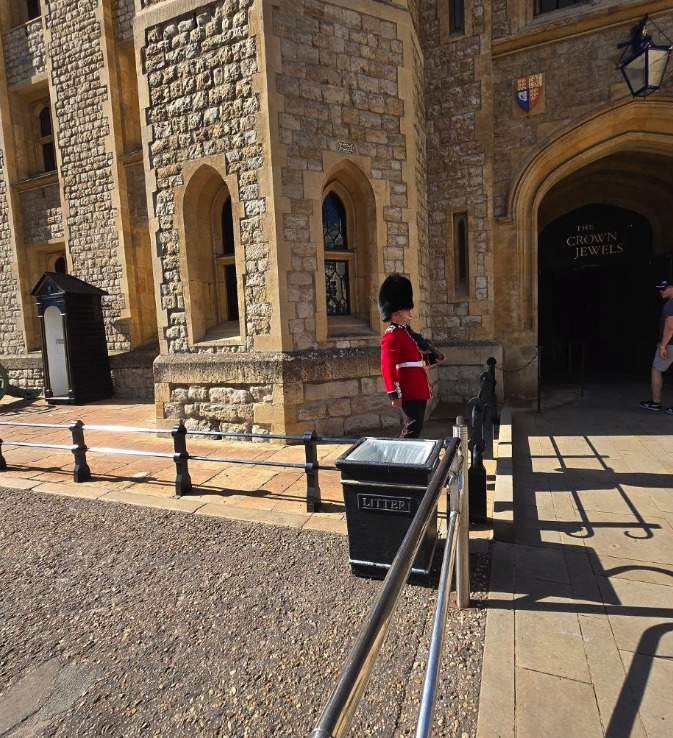
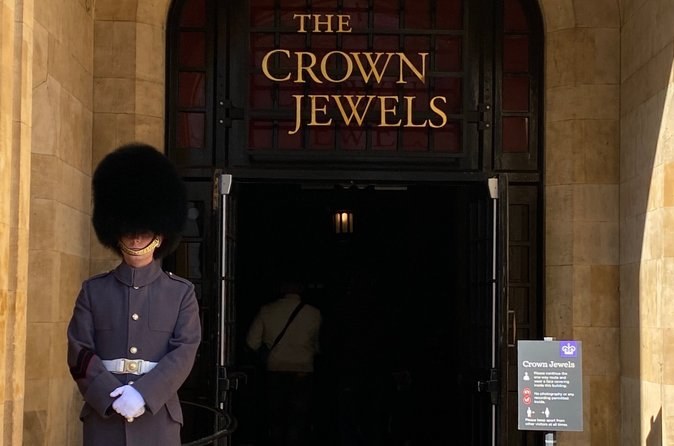
Because the Jewel House cannot absorb a crowd. It is one corridor with a moving walkway in front of the two busiest cases, so the queue is the only real bottleneck in the fortress. Everything else — the keep, the green, the walls — spreads people out. Do the regalia first and the rest of the day has no queues in it at all.
The walkway is worth understanding before you reach it. It moves at a fixed pace past the two most crowded cases and you cannot stop on it. What you can do is step off at the end, walk back round and ride it a second time, which takes four minutes and almost nobody does. Give the Imperial State Crown and the Sovereign’s Sceptre the second pass rather than the first: by then you know what you are looking at.
One more thing about this room. Photography is not permitted anywhere the regalia are displayed, and it is enforced immediately. Put the phone away before you go in and you will get more out of the ten minutes than the people trying to sneak a frame.
How long does the White Tower take?
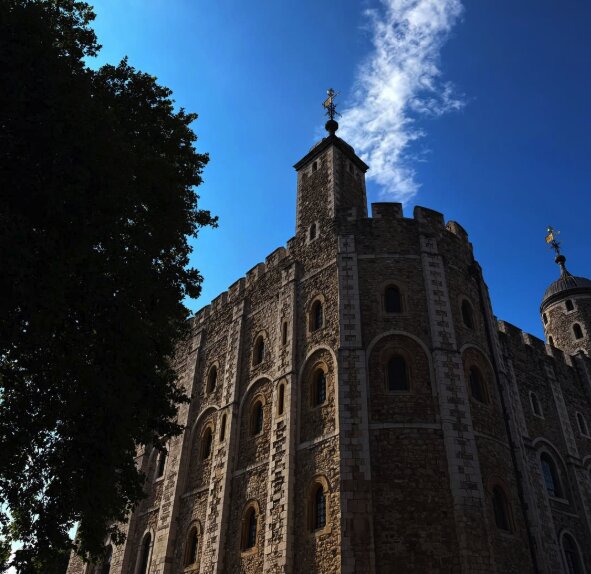
Forty-five minutes at a reasonable pace, and it is stairs from bottom to top with no lift. The armouries fill the upper floors, the Chapel of St John sits inside it, and both are worth stopping for. If anyone in your party is going to struggle with stairs, do this second rather than last, while there is still energy for it.
The building itself is the oldest thing on the site and the reason the whole fortress is named as it is. Work began within a decade of the Conquest, and Henry III had it whitewashed in 1240, which is where the colour in the name comes from. Standing in the chapel, you are in the oldest church building in London still standing whole.
Strollers are not allowed inside, which catches families out at the door. A soft carrier solves it and takes about twenty minutes to walk the floors with. Everything else in the fortress takes wheels perfectly well.
Tower Green, the chapel and the water gate
Twenty-five minutes together, and they sit next to each other. Tower Green is the lawn where three queens were beheaded, marked by Victorian granite paving. The Chapel of St Peter ad Vincula, a few steps away, is where they were buried. Traitors’ Gate is the water gate on the river side, built by Edward I, through which prisoners were rowed in.
Is the Wall Walk worth the extra half hour?
In good weather, yes, and it is the first thing to close in bad. It runs along the top of the inner curtain wall through a sequence of the smaller towers, and it gives you the only view down into the inner ward and out across to Tower Bridge. There are stairs at both ends.
The Medieval Palace, which most people walk past
Reconstructed royal rooms in St Thomas’s Tower, the Wakefield Tower and the Lanthorn Tower, furnished as they might have been under Edward I. It is off the main route and looks like a side door, which is why it is empty when everything else is full. Twenty minutes. The White Tower page covers what is in each.
Where the free Warder tour fits
Anywhere, because departures leave the moat every 30 minutes. The best moment is after the Jewel House and before the keep: the buildings make more sense once somebody has told you what happened in them, and you will have already dealt with the one queue. It runs about an hour and it costs nothing beyond admission.
A Yeoman Warder is a retired warrant officer with at least 22 years of military service behind them, and they live inside the walls with their families. That is why the tour is better than it has any right to be: the person telling you about the executions on Tower Green walks past the spot on the way home. Ask them something at the end — they are far more interesting off-script than on it.
The tour is heavy on beheadings, which is worth knowing if you have a sensitive child with you. Stand at the back where you can peel off, or catch a later departure once the armouries have done their work.
Where to eat without ending your visit
Inside. There is no re-entry, so walking out for lunch spends the rest of the ticket. There are cafes within the walls and water refill points on the grounds. If you are planning a long day, build the break in around midday when everything else is at its busiest anyway.
If you only have ninety minutes
Jewel House, keep, out. That is it, and it is a perfectly good visit. Skip the Wall Walk, the Medieval Palace and the Warder tour, and do not try to add Tower Bridge on the same clock.
If you have the whole day
Add the Fusilier Museum, which is the quietest room in the fortress and where you can sit down. Add a second pass at the Jewel House late in the afternoon, when it is empty. Take the Warder tour properly rather than catching half of it. Then walk east to St Katharine Docks rather than west into the crowds.
If the fortress is one of two things that day
Pair it east rather than west. Tower Bridge is five minutes across the wharf and takes about an hour with the Engine Rooms and the glass floor. St Katharine Docks is the same distance and is where to eat without a queue. Both are walkable, and neither needs a second journey.
What does not work is pairing it with Westminster on your own. The two ends of the river are half an hour apart on the District line and a good deal longer at street level, and doing both properly is a full day rather than a morning. The guided full-day departures exist precisely because that combination is hard to sequence alone, and they solve it by putting a boat in the middle.
What to do with a wet day
Almost nothing changes, which is the useful thing about this fortress. The Jewel House, the keep, the armouries, the Medieval Palace and the Fusilier Museum are all indoors, and between them they are most of the visit. The Wall Walk closes first in bad weather and the grounds are less pleasant, but a wet Tuesday here is a better day out than a wet Tuesday almost anywhere else in London.
Two adjustments help. Take the Warder tour early rather than late, because it is outdoors and the weather usually worsens through the afternoon. And plan a longer stop in the armouries than you otherwise would — four floors of arms and armour absorb an hour easily once you stop treating them as a corridor.
Finishing at Tower Bridge, or on the river
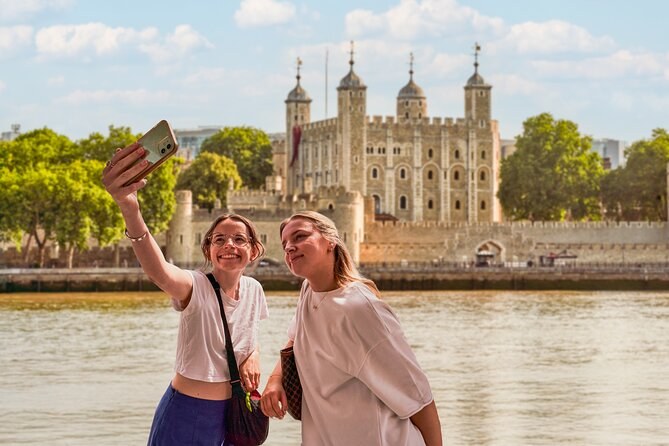
Tower Bridge is five minutes away across the wharf and is a separate attraction with its own admission. The river piers are the same distance: Tower Millennium Pier for river buses, Tower Bridge Quay for the sightseeing cruise. A boat is the better ending if legs have gone, and the walk across the bridge is the better one if they have not. Every option and price is on Tower of London Tours.
Frequently asked questions
How long do you need at the Tower of London?
Three hours is comfortable. Two works if you skip the Wall Walk and the Medieval Palace. A full day is only worth it if the armouries interest you.
What should I see first?
The Crown Jewels, whatever else you plan. It is the only part of the fortress that queues, and it is shortest at opening and after three.
Can I do the Tower and Tower Bridge in one day?
Easily. They are five minutes apart and Tower Bridge has its own admission. One departure bundles the Engine Rooms if you would rather book both together.
Is there anywhere to leave a bag?
No. There are no luggage facilities and large items are prohibited, so use a station locker before you arrive.
Can I leave for lunch and come back?
No — there is no re-entry. Eat inside if the day is long.
When is it quietest?
The first hour and the last ninety minutes. Eleven to three is when coach and school groups overlap.
Tours that fit this
Chosen for what this guide works through.